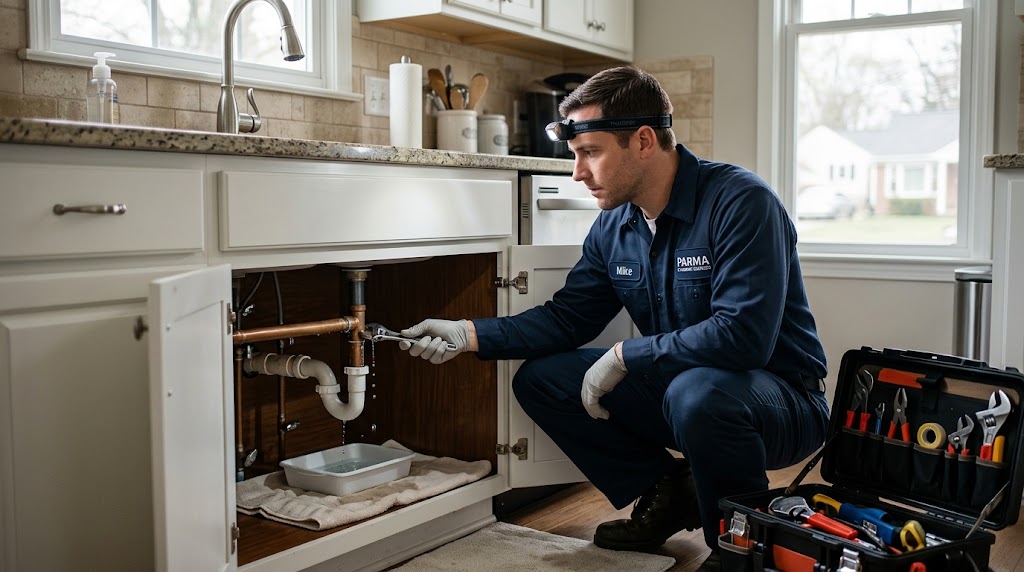
Subzero prairie wind chills can freeze unprotected water supply pipes in a matter of hours. Our technicians safely thaw frozen lines and repair ruptured pipes before catastrophic structural damage occurs.
North Dakota winters are notoriously severe, frequently generating sustained periods where air temperatures drop beneath -25°F accompanied by strong polar winds. Water pipes that travel through exterior wall cavities, unconditioned crawlspaces, unheated garages, or adjacent to basement rim joists are at immense risk of thermal freeze-up. When standing water transitions into solid ice, it expands by approximately 9% in volume.
This phase transition exerts tremendous radial and longitudinal forces—often exceeding 40,000 pounds per square inch (psi). While homeowners assume pipes burst right where the ice forms, the rupture actually occurs downstream. As the expanding ice blockage grows, it acts like an impenetrable piston, trapping pressurized liquid water between the freeze plug and a closed faucet. The resulting hydraulic pressure spike eventually fractures the pipe wall.
Never attempt to thaw frozen pipes using propane torches or open flames. Blowtorches ignite surrounding drywall paper and dry framing timber, and sudden high heat can turn trapped water into pressurized steam, creating localized pipe explosions. Our technicians employ safe, commercial radiant heat blankets and low-voltage electro-thermal thawing equipment that warms lines gradually from open discharge valves inward.
Our rapid response protocol for frozen and ruptured plumbing includes:
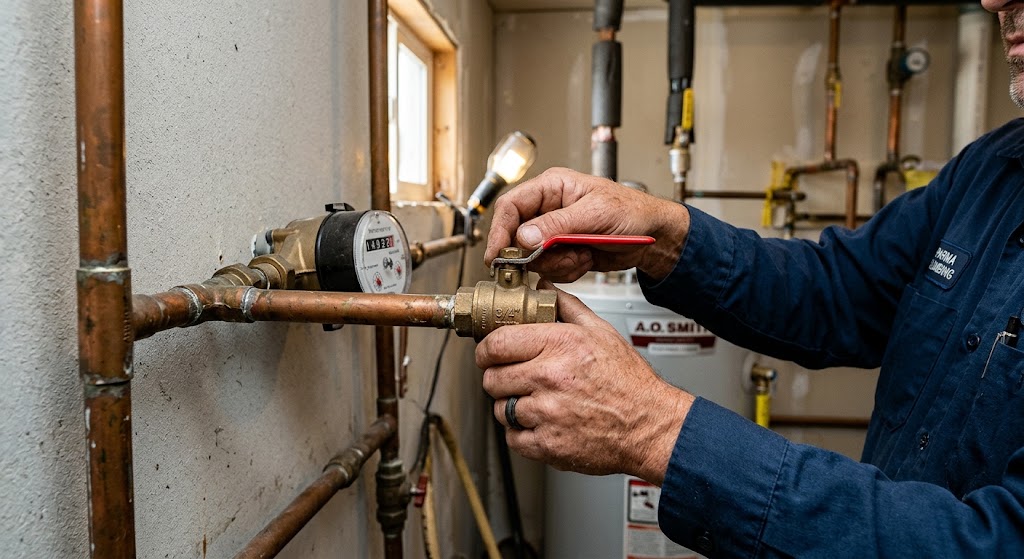
First, locate and close your home's main water shutoff valve to prevent flooding when the ice thaws. Next, open the affected faucet slightly to relieve internal pressure. Never use an open flame torch. Call (888) 205-7875 immediately so a technician can safely thaw the line with professional heating equipment.
PEX-A (cross-linked polyethylene) is significantly more resilient than copper or rigid PVC because of its molecular shape memory. It can expand up to 300% under freezing ice pressures and return to its original diameter after thawing. However, brass fitting joints can still be stressed, so professional inspection is always recommended.
While the pipe is frozen solid, the ice plug itself seals the fracture that it created. Homeowners often believe they avoided damage because nothing is leaking during the freeze. However, the moment temperatures rise and the ice melts, municipal water pressure forces water through the newly opened split.