Plumbing Services in Fargo, ND
Reliable plumbing solutions for Fargo homeowners.
Call (888) 205-7875
Reliable plumbing solutions for Fargo homeowners.
Call (888) 205-7875
From routine maintenance to major repairs, our team is here to help with all your plumbing needs in Fargo. We understand the unique challenges created by Red River Valley soils and northern winter weather.
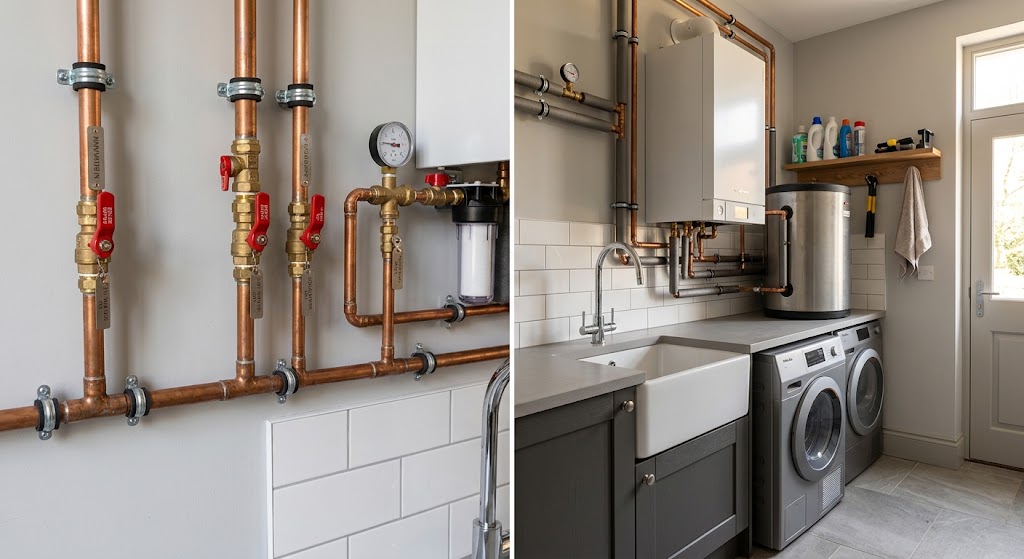
As the largest metropolitan community in North Dakota, Fargo features a rich mix of historic character homes in Hawthorne, Clara Barton, and Island Park alongside expansive modern developments in South Fargo and Davies. This diverse housing stock requires deep technical familiarity with local municipal water distribution, sewer codes, and subsoil mechanics.
The entire Fargo-Moorhead metro basin sits atop the ancient lakebed of glacial Lake Agassiz, characterized by heavy, highly expansive Fargo-Ryan silty clay. These lacustrine clays expand dramatically during wet periods and shrink substantially during dry spells. This cyclical soil swelling places intense shearing loads on rigid sewer laterals, water service lines, and basement foundation footings, making flexible PEX-A expansion lines and heavy Schedule 40 sewer pipes essential.
Fargo receives its municipal drinking water from the Red River of the North supplemented by the Sheyenne River. While the Fargo Water Treatment Plant provides high-level ozone disinfection and membrane softening, winter water arrives at homes near freezing temperatures (36°F to 39°F). Water heaters in Fargo must endure intense heating cycles to supply domestic hot water, making regular sediment flushing and pressure relief valve inspections crucial.
Our localized service protocol for Fargo homeowners ensures efficient results:
Fargo’s flat topography, dense clay soil, and proximity to the Red River result in rapid groundwater elevation during the spring snowmelt. Because water cannot easily penetrate deep clay subsoil, thousands of gallons flow toward basement drain tiles. A dual-float submersible pump with an auxiliary battery backup is vital to prevent basement flooding.
In the Fargo area, winter frost routinely penetrates between 5 and 6 feet deep, and can reach deeper during extended subzero cold snaps without snow cover. Water service lines and sewer laterals must maintain proper depth and insulation where they enter basement foundation walls.
Yes. While Fargo's municipal treatment plant softens water, residual mineral content still drops out of suspension when heated. Over time, calcium scale settles at the bottom of hot water tanks, causing popping noises and reducing efficiency. An annual professional flush helps preserve tank longevity.