Plumbing Services in Bismarck, ND
Reliable plumbing solutions for Bismarck homeowners.
Call (888) 205-7875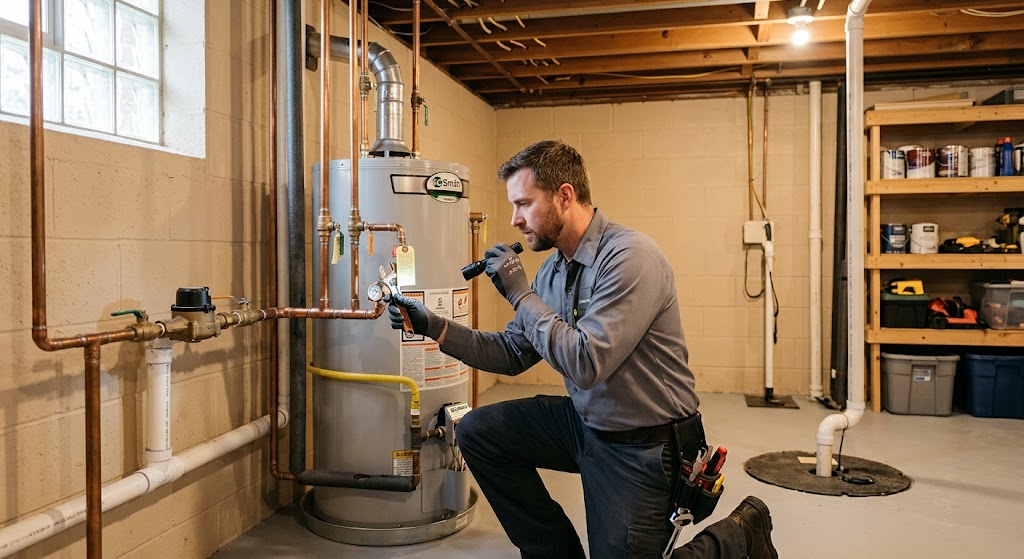
Reliable plumbing solutions for Bismarck homeowners.
Call (888) 205-7875
As North Dakota's capital city nestled along the bluffs of the Missouri River, Bismarck presents diverse plumbing environments—from historic brick homes near the Cathedral district to contemporary hillside residences in north Bismarck.
Bismarck’s topography rises steeply from the Missouri River bottoms toward surrounding northern prairie plateau bluffs. This rolling terrain creates notable variations in municipal distribution pressure. Homes in lower valley areas can experience excessive main line pressure exceeding 90 to 100 psi, placing constant stress on toilet valves, appliance hoses, and water heater tanks. We install and service adjustable pressure-reducing valves (PRVs) to maintain a safe, steady 55 to 65 psi throughout your home.
The City of Bismarck draws its municipal water supply directly from the Missouri River. The municipal treatment facility employs conventional lime softening, coagulation, filtration, and chlorination. While the resulting water meets all high-purity health benchmarks, winter supply temperatures drop below 40°F, and natural bicarbonate hardness still drops out in hot water heaters. Over several seasons, this sediment forms hard calcium scale that reduces heating speed and causes popping noises.
Burleigh County plumbing regulations require underground water service lines and sewer laterals to be buried with a minimum of 5.5 to 6 feet of cover to stay below the frost line. In hillside developments where winds sweep snow off exposed foundations, crawlspaces and cantilevered overhangs are especially vulnerable to freeze-up. We provide freeze-resistant PEX-A expansion repiping and closed-cell thermal wrapping to secure vulnerable plumbing.
Our systematic service approach for Bismarck homeowners includes:
Because Bismarck rises from river bottoms to high northern bluffs, municipal water towers must maintain high pressure to reach hilltop homes. As a result, homes in valley areas often experience excessive water pressure (over 85 psi), which can damage washing machine hoses and cause water heater relief valves to drip. Installing a pressure-reducing valve restores safe levels.
Yes. While treated by the city, minerals naturally present in river water precipitate when heated above 120°F. Over a few years, calcium carbonate forms a dense crust at the bottom of the tank, causing popping sounds and slowing water recovery times during cold winter months.
Under City of Bismarck and North Dakota state plumbing codes, residential water service lines must be buried at least 6 feet below grade to prevent freezing during severe subzero prairie winters.